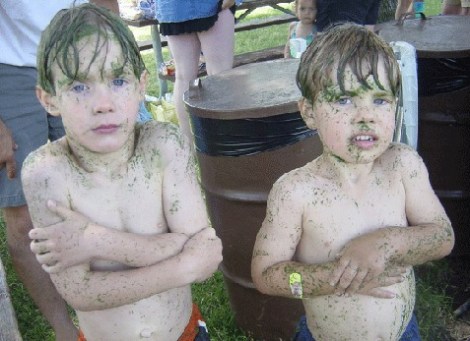
Did toxic blue-green algae make your summer a bummer?
What: Join Grist Food Editor Twilight Greenaway, Resource Media’s Penelope Whitney, and the Food and Environment Reporting Network (FERN)’s Jessica Marshall for a live Twitter chat about the links between toxic algae and how we grow our food.
When: This Thursday, Sept. 20, at 10:00 a.m. PST/1:00 p.m. EST, hashtag #greenslime.
Why: This summer, toxic blue-green algae kept people out of their favorite lakes when 20 states across the U.S. issued warnings to stay out of the water. It threatened health and drinking water supplies, and hurt local businesses that depend on recreation and tourism. (See this week’s Grist article on the topic.)
The stinky algae is fed by chemical fertilizer and manure runoff from farms (yep, it’s another reasons to support organic agriculture). What’s more, scientists say that warmer temperatures and drought spur algae growth, so it’s likely to spread across more states in the coming years.
Have you had experience with green slime? If so, we want to hear your stories. We’ll also be chatting about what role sustainable agriculture can play in making our nation’s lakes blue again. And we’ll be joined by experts in states like Ohio and Iowa who have been battling green slime for years. Join us!