 From the Washington Post,
 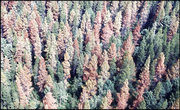 From the Washington Post, an article worth reading on a subject that’s depressingly well-known to Canadians, but probably unfamiliar to most Americans: the mountain pine beetle outbreak devastating forests in British Columbia. The damage has been colossal:
Surveys show the beetle has infested 21 million acres and killed 411 million cubic feet of trees — double the annual take by all the loggers in Canada. In seven years or sooner, the Forest Service predicts, that kill will nearly triple and 80 percent of the pines in the central British Columbia forest will be dead.
Secure · Tax deductible · Takes 45 SecondsSecure · Tax deductible · Takes 45 SecondsMeanwhile, the beetle is moving eastward. It has breached the natural wall of the Rocky Mountains in places, threatening the tourist treasures of national forest near Banff, Alberta, and is within striking distance of the vast Northern Boreal Forest that reaches to the eastern seaboard.
Foresters and researchers agree that the principle culprit is global warming (because warmer winters, even by a few degrees, have not been severe enough to kill the native beetle and suppress its now-exponential population growth). So the pine beetle infestation is worrisome, not only for the severe ecological impacts, but because it appears to be an early sign of the devastation to be wrought by a warming atmosphere.

