Uncategorized
All Stories
-
Let’s Balk About Sex
Eastern Pacific gray whales, tired and hungry, are breeding less Researchers say the gray whales of the eastern Pacific are in deep trouble, and their fate could be an indicator […]
-
Crazy quotes from everyone’s favorite skeptic
Climate skeptics love citing MIT prof Richard Lindzen, probably because, well, there aren’t many other semi-legitimate skeptics left to cite. (And how many of the dead enders can bamboozle their […]
-
Senators demand Congressional participation in Endangered Species Act changes
On Wednesday, several key Senators sent a letter to Interior Secretary Dirk Kempthorne expressing concern about an Interior Department proposal they say will weaken the Endangered Species Act. The letter […]
-
Reading the fin print
Some folks are quick to give sharks a bad rep without considering their importance as top feeders in the marine food web. But when we remove these so-called lions of the ocean from their habitat through shark-finning and bycatch, it doesn't take long for the rest of the food web to feel the effects. Chew on this:
In 2004, North Carolina's century-old bay scallop fishery effectively ended because too few scallops survived into the autumn to sustain fishing, according to a report published in Science last month.
The culprit? Rays. Vast increases in the numbers of rays, which eat scallops. The rays have been decimating the young scallops before they could grow to commercial size.
So where do the sharks come in?
-
Johnson astonishes Whitehouse
I meant to highlight a post on Warming Law that contains this delightful bit from a recent hearing on the consequences of Mass. v. EPA: When asked to identify our […]
-
Not all amphibians are toast
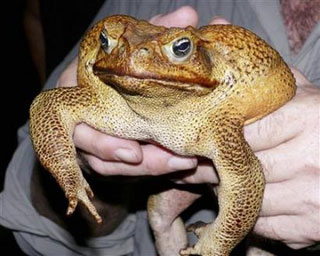 Not all amphibians are toast. From Mongabay:
Poison arrow frogs appear to make special effort to avoid exposure to damaging ultraviolet-B radiation ... The researchers found that the two species of frogs appear to be exhibiting UV-B avoidance behavior, with vocalizing frogs found at sites where UV-B levels were more than six times lower than average.
The ozone depletion problem is generally assumed to be under control for now, though I'm sure you can find scientists who would argue otherwise, especially if fame and wealth would result (as with the topic of global warming). A lot of people have confused the two largely unrelated issues. However, UV-B radiation levels are still elevated and are suspected to be a major factor in the present amphibian extinction crisis. If so, then there is hope that the amphibian extinction event may slow as UV-B radiation levels continue to drop:
-
Indigenous leader Julio Cusurichi Palacios battles for an intact Amazon
Julio Cusurichi Palacios. Photo: Goldman Environmental Prize. The Peruvian Amazon is one of the most remote places in the world. In its wildest corners, in the Madre de Dios region […]
-
Conservation plan nixed
Though eel populations have declined 99 percent since the 1970s, according to a spokesman for the European Union, an EU eel conservation plan three years in the making was nixed by the French, according to a story by Charles Clover.
Mr. Clover is the environmental editor of the United Kingdom's Telegraph newspaper, and author of one of Oceana's favorite books The End of the Line.
-
Willie Corduff has taken arms against a sea of Shell troubles
Willie Corduff. Photo: Goldman Environmental Prize. “We’d never objected to anything in our whole lives,” says Irish farmer Willie Corduff. But when Shell Oil proposed to put a high-pressure gas […]
-
Hammer Simwinga provides alternatives to African poaching
In the 1970s, one of the densest populations of elephants on the African continent roamed the Luangwa Valley of Zambia. By the end of the next decade, massive poaching for […]
