It depends on the fuel used to drive the conversion process — according to a new study:
In particular, greenhouse gas emission impacts can vary significantly — from a 3% increase if coal is the process fuel to a 52% reduction if wood chips are used.
Secure · Tax deductible · Takes 45 SecondsSecure · Tax deductible · Takes 45 Seconds
These results come from the energy life-cycle wizards of Argonne Lab, who have published a new study, "Life-cycle energy and greenhouse gas emission impacts of different corn ethanol plant types," in the open-access Environmental Research Letters.
Here is a figure showing "well-to-wheels greenhouse gas emission changes by fuel ethanol relative to gasoline":
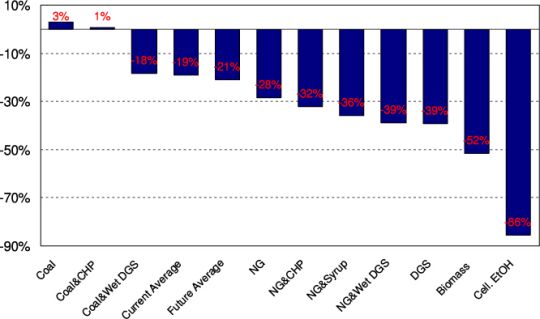
The greenhouse gas benefit from most corn ethanol is modest at best unless the energy source is biomass such as wood chips. And other studies have found no climate benefit from corn ethanol.
Thus, corn ethanol should not be viewed as a major climate solution because its ultimate supply is limited and its climate benefit small or nonexistent. Its main role should be as a transition fuel to the Holy Grail of biofuels — cellulosic ethanol, which reduces total greenhouse gas emissions a whopping 86 percent relative to gasoline and which is potentially available in abundance.
This post was created for ClimateProgress.org, a project of the Center for American Progress Action Fund.


